
Fashion
* journal1. Description
This approach uses multi-layer combinations drawn from European cold-weather dressing and older academic wardrobes. Garments are stacked in an order that is not standard but remains functional and visually coherent. Typical components include thin base layers, open mid-layers such as lightweight flannels, structured shirts worn over them, and outerwear made of wool or similar dense materials. Headwear made from fur or faux-fur aligns with regional winter garments and integrates with the overall weight of the outfit.
Characteristics include moderate color palettes, visible texture transitions, and subtle asymmetry at collars, hems, and sleeves. The result emphasizes density without bulk, achieved by mixing light inner layers with heavier top layers. This reduces the appearance of randomness and creates a unified shape.
2. fits:
- Long-sleeve thermal under a button-up, with a sweater-vest on top, finished with a long wool coat; trousers in neutral shades.
- Open flannel under a knit, topped with a structured topcoat; straight or slightly wide-leg denim.
- Thin turtleneck under a collared shirt, with a field jacket or heavy parka; muted or off-white pants.
2.1. Designers and labels that show related tendencies:
- Margaret Howell (layering of shirts, soft structure).

- Lemaire (controlled volume, muted tones).
- Our Legacy (Scandinavian layering, material focus).
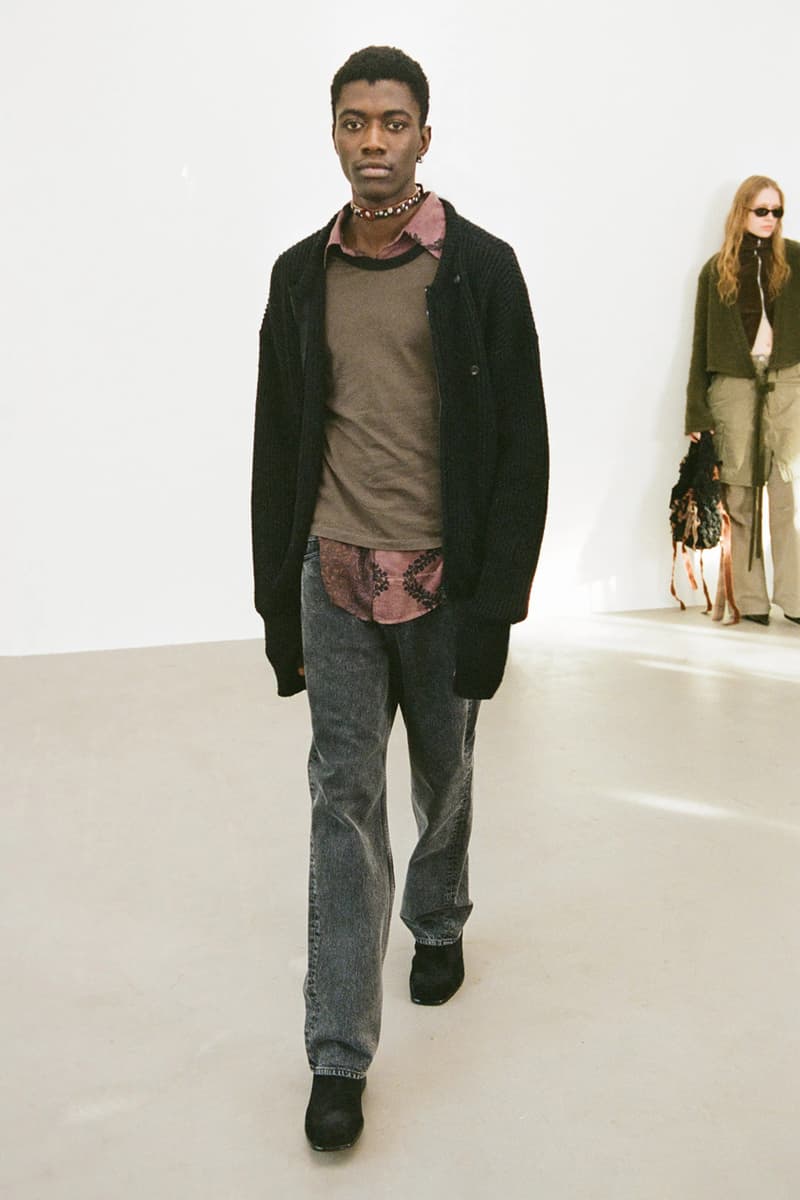
- Dries Van Noten (textile variation and mixed mid-layers).
- Early Acne Studios (clean silhouettes with winter-weight pieces).
2.2. Why it works
The arrangement works because the layers differ in thickness, rigidity, and surface texture, preventing collapse into a single mass. Each garment contributes a discrete boundary—collar, cuff, placket, or hem—which creates defined divisions. The muted palette keeps the layering visually stable, and the materials (wool, cotton, flannel) complement each other in weight and finish. This combination produces a coherent, cold-weather–appropriate set of outfits without requiring strict formal structure.
3. Elsewhere
3.1. References
3.2. In my garden
Notes that link to this note (AKA backlinks).