
Goal Setting and Components of Fitness
* school gymPPL10M-01
1. SMART Goal Setting
After looking at your current fitness levels and the criteria behind the SMART formula, set two goals, one based on your fitness assessment results and one that is health-related. Complete all parts of the formula.
1.1. Goal #1–Health
- S–I would like to gain 10 pounds while remaining low body fat %. Right now i weigh ~110lbs.
- M–I know I will achieve this goal when my weight surpasses 120lbs and my body fat remains below 16%.
- A–I will eat a caloric surplus. I will try to eat nutritious and healthy meals.
- R–Yes, this is realistic. it is not extremely hard to gain ~0.5lbs/week. I will have to eat at a ~125% caloric surplus ( see: calorie calculator)
- T–I will complete this goal by may 2026
1.2. Goal #2–Fitness
- S–I would like to reach level 10.0 on the beep test.
- M–I know i will accomplish this goal when I reach 10.0 on the beep test
- A–I will exercise my cardiovascular system twice a week in order to increase my fitness.
- R–This is realistic because i got a 9.2 on the first test.
- T–I will complete this by the 2nd beep test.
1.3. Challenges
- Time constraints: I may not have enough time for semiweekly cardiovascular exercises during busy periods where i must study. There is no real solution to this, but I can try to compensate for missed exercise sessions
- Insufficient Food: There may not be nutritious food in my home that allows me to fulfill my caloric surplus. I will fix this by requesting my parents fulfill more saturating meals.
- Overeating: I do not wish my final weight to dramatically exceed 120lbs and for my body fat to change significantly. I can ensure I reach my target by exercising and tracking my calories
2. Components of Fitness
2.1. Health Related Components of Fitness
- Cardiorespiratory fitness: The ability of the heart and lungs to provide the muscles with energy and oxygen so they can engage in cellular respiration.
- Muscular Strength: The capacity to lift weight or exert force.
- Muscular Endurance: The capacity of muscles to function.
- Flexibility: Flexibility is defined by the capacity of muscles to stretch,
- Body Composition: The body's distribution of fat and muscle
2.2. Skill Related Components of Fitness
- Agility: The capacity to precisely and swiftly shift direction is known as agility.
- Balance: The capacity to remain steady while moving or remaining motionless is known as balance.
- Coordination: The capacity to move with both balance and agility
- Power: The capacity to exert maximum effort in the shortest amount of time
- Reaction Time: The capacity to react to an occurrence as quickly as possible.
- Speed: The capacity to go a limited distance as fast as one can.
2.3. Link one sport and a specific movement from that sport to a HEALTH related component of fitness. (Basketball, Defensive rebound, Muscular strength)
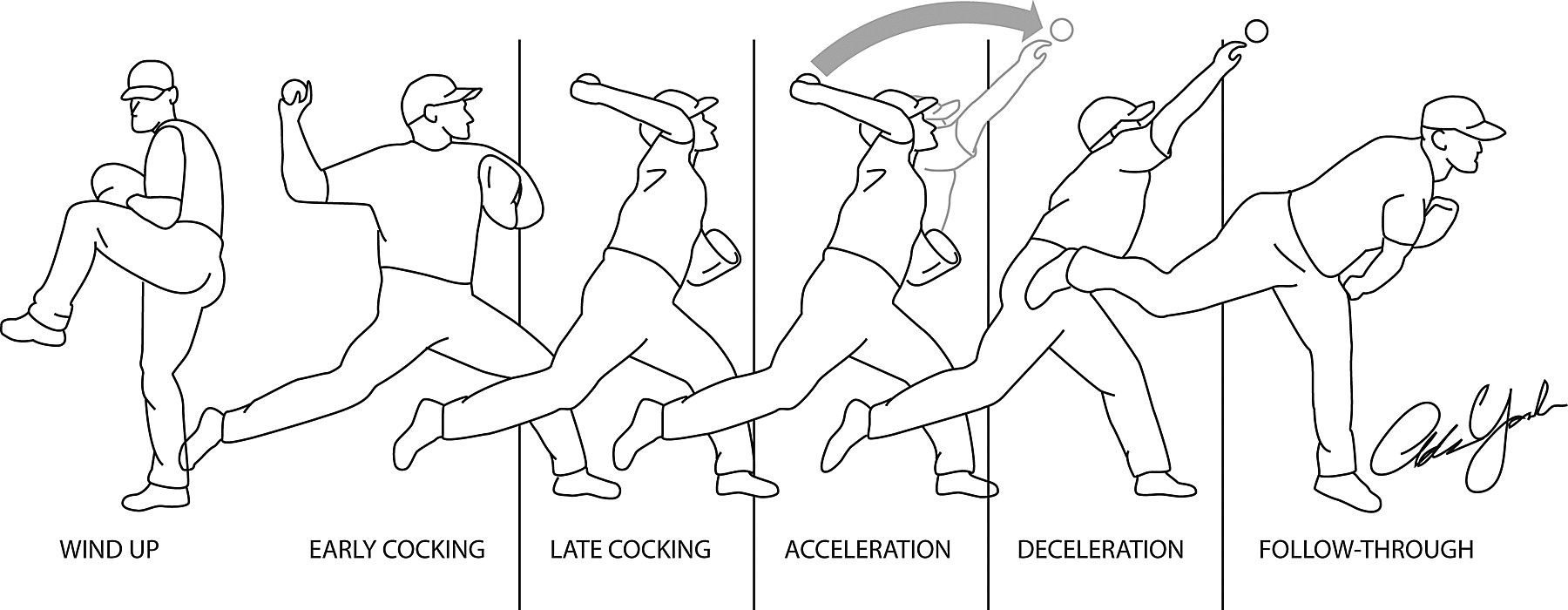
The pitching movement in baseball requires flexibility and shoulders to generate velocity, and muscular strength in order to accelerate and release the ball.
2.4. Link one sport and a specific movement from that sport to a SKILL related component of fitness. (Basketball, Defensive rebound, Muscular strength)
 Balance is necessary when making paddling strokes. Your posture must be controlled and the strength of your strokes should adjust to external distances in order to maintain stability.
3. Elsewhere
3.1. References
3.2. In my garden
Notes that link to this note (AKA backlinks).
Acronyms