
Geography, Nov 17, P7
* school geography1. TODO Daily
"We have a lot to cover this afternoon". Today, Mr.Fox conducted a homework audit. We were required to complete pages 55-57 in the geography textbook.
[X]Watch the video. Questions may reference it on the demo()[ ]Demo on
2. Generations
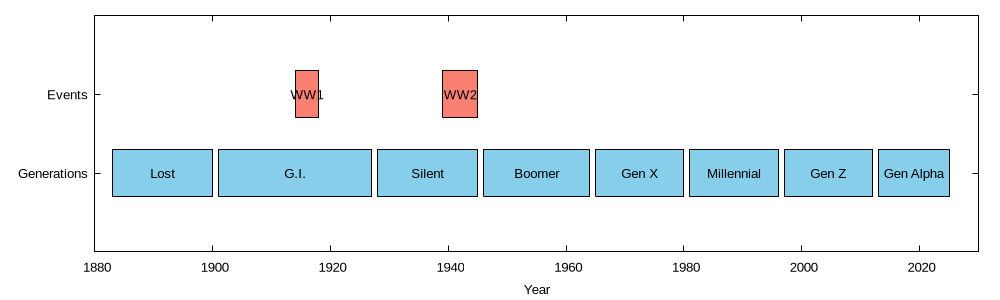
- The G.I generation(Greatest generation) survived WW1(1914-1918),
- WW2 started in 1939 and ended in 1945
- However, the Chinese considered the start of WW2 to be 1931, because that was when the Japanese attacked Manchuria.
- "December 7, 1914 is day that will live in infamy" – Franklin. D. Roosevelt.
- The U.S joined WW2 after the attack on pearl harbor(1941). Two bombs were dropped: Hiroshima & Nagasaki.
- During WW2, the immigration rates were especially low because of the war and the great depression.
- William Lyon Mackenzie King was the prime minister during WW2. His immigration minister said the famous quote "none is too many" when asked about Jewish immigration to Canada.
3. Hans Rosling on the Global Population
Hans Rosling explains how the world is changing and what today’s data reveals about the future. His perspective is fairly optimistic. He goes against the common belief that population growth is out of control.
3.1. Population Growth Plateau
In 10,000 BCE, the human population was around 10 million. It grew slowly until the industrial revolution (1800 AD), when it began to rise rapidly. This has worried people for a long time.
Most current population growth occurs in Asian countries. Bangladesh, for example, is a densely populated country near India. Today, Bangladeshi families tend to be small because they cannot afford many children. This was not always true: the country shifted from large, traditional families to working women and small households. The government encouraged smaller families and provided contraceptives to reduce unwanted pregnancies. As a result, Bangladesh transitioned from high birth rates and low life expectancy to low birth rates and long lives.
This trend is global: developed countries have small families and long lives, while developing countries generally have larger families and shorter lives. The global average birth rate is now 2.5, compared to 5 in 1965. Many people still assume countries like Bangladesh have large families, but this view is outdated.
3.1.1. Drivers of the Global Shift
Several forces contributed to the dramatic decline in birth rates:
- Education
Children and adults alike are taught about the benefits of smaller families, and women’s increased access to learning changed family dynamics.
- Health Care and Child Mortality
Historically, 1 in 5 children died before age 5. Families had many children to ensure some survived. With advances in health care and reduced infant mortality, it was unnecessary to have so many children. The industrial revolution increased population not because of more births, but because less people died.
3.1.2. Rosling's Projection
Rosling predicts that global population will plateau at around 11 billion. He argues that we have already reached “peak child” (2017), meaning the number of children worldwide has stopped increasing. Future growth will come from inevitable adult “fill-up.”
3.2. Population Distribution
Rosling anticipates a slight decline in Europe’s population and significant increases in Africa and Asia. He predicts that 80% of the world will live in those regions.
Asia is becoming wealthier. Rosling illustrates this with the story of Andre and the bicycle: simple access to transportation accelerates economic progress and helps families escape extreme poverty.
Africa still contains many people living in extreme poverty, but conditions have improved greatly. Urban areas have experienced economic growth and job creation, but rural areas are still a challenge. They have high fertility rates and limited opportunities.
3.3. Wealth Distribution
One billion people live below the extreme poverty line and are unable to feed their families every day.
The richest billion earn about $100/day, the middle billions around $10/day, and the poorest billions also around $1–$2/day. The distribution is uneven and kinda steep.
3.4. Development
Today, 80% of the world is literate. However, public perception suggests otherwise because people rely on outdated worldviews that do not reflect the rapid global changes.
In 1963, the world was divided into two clear income groups:
- The richest countries (Western Europe and America)
- The poorest countries (Asia and Africa)
Now, extreme poverty is lower, and wealth is more evenly distributed across nations. Rosling notes that the proportion of people living in extreme poverty can continue to decline. The UN set a goal of eliminating extreme poverty within 20 years.
However, while the rich and middle groups are moving upward, the poorest group remains stuck. Most people want higher income for improved quality of life. This pursuit often involves increased machine use, which leads to greenhouse gas emissions and impacts climate change.
Almost all fossil fuels are consumed by the richest 3 billion people. Usage decreases exponentially after that. Most future births will occur in the middle or poorer income groups.
3.5. Conclusion
According to Rosling, the challenge of population growth is already being resolved. peak child has been reached.
The world is much better than you think.
4. Elsewhere
4.1. References
4.2. In my garden
Notes that link to this note (AKA backlinks).